What Is the Cornea?
The cornea is the outermost layer of the eye and acts like a natural window.
It is clear, strong, and curved, allowing light to enter the eye and focus properly on the retina.
The cornea has no blood vessels, which helps keep it transparent. Instead, it receives nutrients from tears and the aqueous fluid behind it.
Layers of the Cornea
The cornea is made up of five main layers, each with a specific function:
- Epithelium – The outer protective layer that heals quickly from minor injuries.
- Bowman’s Layer – A tough layer that adds strength.
- Stroma – Makes up 90% of corneal thickness and maintains its shape.
- Descemet’s Membrane – A thin but strong inner layer protecting the cornea.
- Endothelium – The deepest layer that pumps excess fluid out, keeping the cornea clear.
If the endothelium is damaged, the cornea becomes swollen and cloudy.
Functions of the Cornea
1. Focuses Light
The cornea provides most of the eye’s focusing power.
Its smooth, curved shape helps bend light rays toward the retina for clear vision.
2. Protects the Eye
The cornea acts as a shield against:
- Dust
- Germs
- Pollen
- Injury
- UV light
3. Maintains Eye Moisture
Tears spread across the cornea, keeping it moist, nourished, and comfortable.
Common Corneal Conditions
1. Keratoconus
A progressive condition where the cornea becomes thin and bulges into a cone shape, causing blurry and distorted vision.
2. Corneal Infections (Keratitis)
Caused by bacteria, viruses, fungi, or parasites.
Symptoms include pain, redness, and light sensitivity.
3. Corneal Abrasion
A scratch on the corneal surface, often painful but usually heals quickly.
4. Corneal Edema
Swelling of the cornea due to endothelial damage, leading to cloudy vision.
5. Dry Eye Disease
Insufficient tears or poor-quality tears can irritate the cornea and cause burning or blurred vision.
6. Corneal Dystrophies
Genetic conditions that cause clouding or deposits in the cornea over time.
How Corneal Diseases Are Diagnosed
Eye specialists use advanced tests such as:
- Slit-lamp examination
- Corneal topography (maps cornea shape)
- Pachymetry (measures thickness)
- Specular microscopy (checks inner endothelial layer)
- OCT scanning (detailed imaging)
Accurate diagnosis helps determine the best treatment plan.
Corneal Treatment Options
1. Medications
Eye drops for infections, inflammation, or dryness.
2. Special Contact Lenses
RGP or scleral lenses improve vision in conditions like keratoconus.
3. Corneal Cross-Linking (CXL)
Strengthens the cornea to stop keratoconus progression.
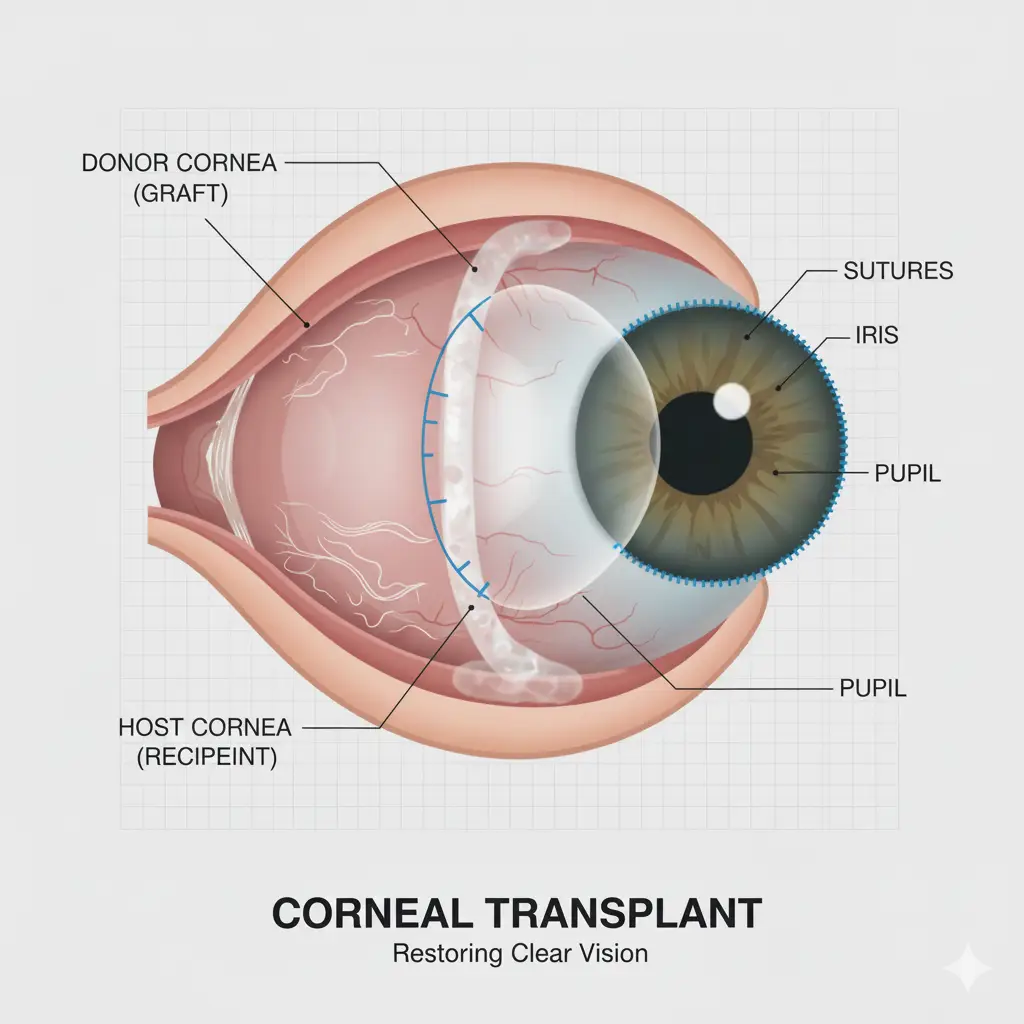
4. Corneal Transplant
When the cornea is severely damaged, partial or full transplantation (DALK/PK/DMEK) restores vision.
5. Laser Procedures
Used for refractive errors or certain corneal irregularities.
How to Keep Your Cornea Healthy
- Avoid rubbing your eyes
- Maintain good contact lens hygiene
- Wear protective eyewear in dusty or hazardous environments
- Stay hydrated and use lubricating drops if needed
- Protect eyes from UV rays with sunglasses
- Get regular eye check-ups, especially if you notice vision changes
Conclusion
The cornea is a delicate yet powerful part of the eye that plays a major role in vision. Understanding its structure, function, and common problems can help you identify symptoms early and seek timely care. With modern treatments and advanced diagnostics, most corneal conditions can be treated effectively and vision can be preserved.
Need Expert Medical Advice?
Our team of experienced doctors is here to help you with any health concerns.
Book Appointment